Packaging waste and the new EU rules
August 25, 2026 by Michael
Since August 12, 2026, the EU's Packaging and Packaging Waste Regulation (PPWR) applies to everyone who ships products in a box – including small shops like ours. If you sell across borders, each country can ask you to register and report how much packaging you placed on its market, broken down by material.
The rules were written with big producers in mind, but the paperwork lands on everyone: registrations and authorized representatives in every country, annual costs that can reach hundreds of euros per market – for packaging whose environmental footprint is measured in cents. We can't fix the bureaucracy. But we can make the numbers part painless.
So we taught Panelque to count packaging.
Here's how it works. Open any packaging component in Inventory – a box, a mailer, a void fill – edit it, and set two things: the weight of one unit in grams and its packaging material. The materials match the PPWR categories: paper and cardboard, plastic, glass, ferrous metals, aluminium, wood, and other.
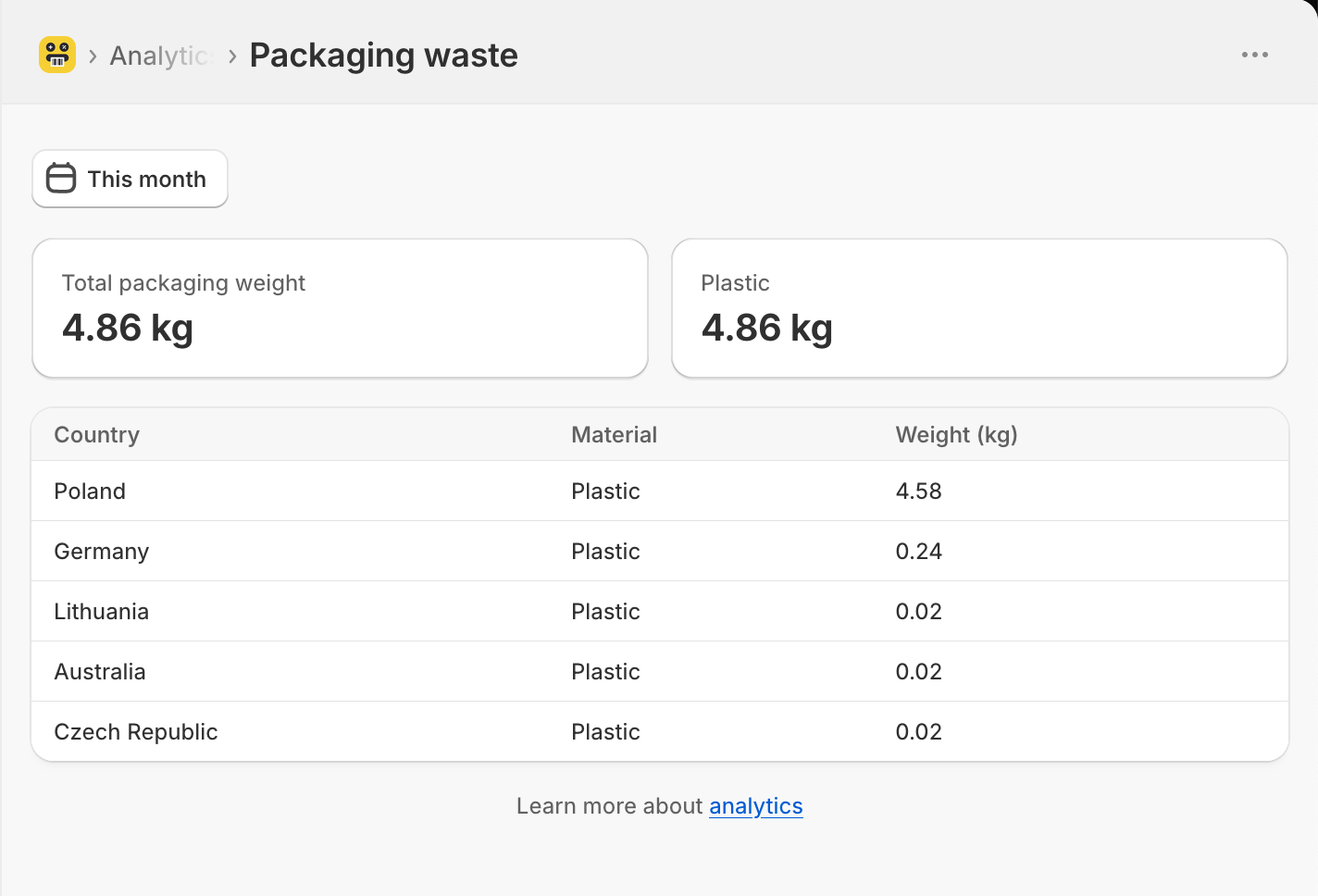
That's the whole setup. From then on, every time packaging is used on an order, Panelque adds its weight to the order's destination country. The new Analytics → Packaging waste page shows the totals for any period: overall packaging weight, a card per material, and a country-by-country table with material and kilograms – exactly the breakdown national producer registers ask for.
A few things we made sure of along the way:
- Fractional materials count correctly. Paper filler measured in meters or shrink wrap in kilograms rolls up just like boxes counted in pieces.
- Only real shipments count. If you undo stock usage on an order, the weight disappears from the report with it.
- It's the same data you already keep. If you're already writing down what goes into an order, the report fills itself in – there is no second bookkeeping system to maintain.
When a reporting deadline comes around, you pick the period, read the numbers per country, and copy them into the register. What used to mean digging through order exports and a kitchen scale is now a page you open twice a year.
We'd still prefer one EU-wide portal and a sensible threshold for small senders. Until then, at least the weighing is done.